
The file on
American Civil War
1861-1865
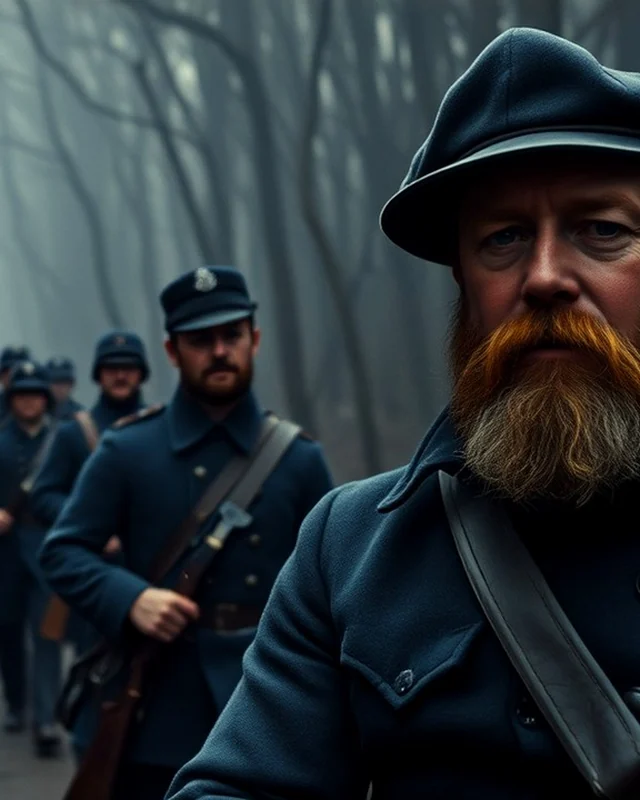
Could a nation founded on liberty survive while four million people were held in slavery? In this hour-long episode of The Wars Of History Podcast, Mike tells the full story of the American Civil War, from 1861 to 1865: the war that ended slavery in the United States, saved the Union and rewrote the Constitution. It's a conversational deep dive that goes well beyond the video, with more stories, more people and their own words, and it keeps every side in view, from soldiers in blue and gray to enslaved people who freed themselves and the families waiting at home.
We start with the road to war: slavery and the cotton economy, the Missouri Compromise and the Compromise of 1850, the Fugitive Slave Act, Frederick Douglass and "What to the Slave Is the Fourth of July?", Harriet Tubman and the Underground Railroad, Uncle Tom's Cabin, Bleeding Kansas, the caning of Charles Sumner, the Dred Scott decision, Lincoln's "house divided" speech and John Brown's raid on Harpers Ferry.
Next comes secession. We cover the election of 1860, the Confederate States of America and Jefferson Davis, what the secession declarations and the Cornerstone Speech actually said about the cause of the war, Lincoln's "better angels" first inaugural, the bombardment of Fort Sumter, Robert E. Lee's choice, the border states, the birth of West Virginia and the First Battle of Bull Run (Manassas), where Stonewall Jackson got his name.
Then the war widens: the Anaconda Plan and the Union blockade, George McClellan, the Monitor and the Virginia at Hampton Roads, Ulysses S. Grant and "Unconditional Surrender" at Fort Donelson, Shiloh, the fall of New Orleans, the Seven Days, Antietam (the bloodiest day in American history), Clara Barton, Lincoln's letter to Horace Greeley and the Emancipation Proclamation.
After that, the turning point: the United States Colored Troops, the 54th Massachusetts at Fort Wagner, Sergeant William Carney, the Combahee River Raid, Chancellorsville, Gettysburg, Little Round Top and Pickett's Charge, the siege of Vicksburg, the draft riots, the Richmond bread riot and the Gettysburg Address.
Finally, the end and the aftermath: Grant against Lee from the Wilderness to Petersburg, Sherman's capture of Atlanta and the March to the Sea, Lincoln's reelection and second inaugural ("with malice toward none"), Appomattox Court House, Lincoln's assassination, Juneteenth, the Thirteenth, Fourteenth and Fifteenth Amendments, and Reconstruction and its betrayal. Death tolls are given as ranges, because estimates vary. We close with a longer look at what this war still teaches us.