
The file on
Iraq War
2003-2011
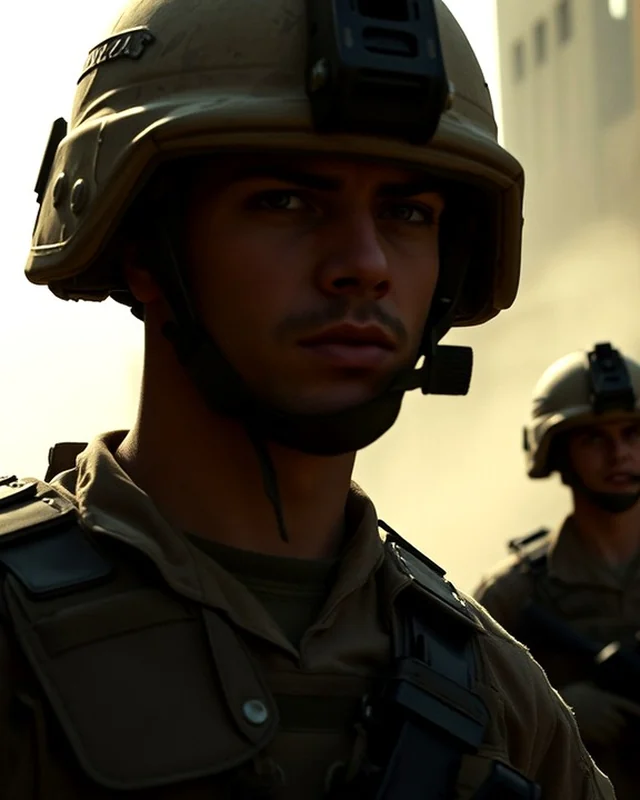
In March 2003, an American-led coalition invaded Iraq, and within three weeks Saddam Hussein's government was gone. What followed was nearly nine years of war that divided nations, transformed the Middle East and is still argued about today. In this hour-long episode of The Wars Of History Podcast, Mike tells the full story of the Iraq War as carefully and fairly as possible. It's a conversational deep dive that goes beyond the video and gives a voice to everyone involved: Iraqi civilians, Sunni and Shia Arabs, Kurds and minorities, American, British and other coalition soldiers, Iraqi interpreters, and the supporters and critics of the war.
We begin with Iraq itself: Mesopotamia, the borders drawn after the First World War, Saddam Hussein's rise and police state, the Iran-Iraq War, the Anfal campaign and the Halabja chemical attack, the 1990 invasion of Kuwait, the Gulf War, the crushed 1991 uprisings, no-fly zones, sanctions, Oil for Food and the UN weapons inspectors.
Next comes the road to war after September 11: the "axis of evil", the case for war, the WMD intelligence (aluminum tubes, the Niger uranium claim, Curveball and the mobile labs), Britain's 45-minute dossier, Resolution 1441, Hans Blix and Mohamed ElBaradei, Colin Powell at the UN, the global protests of February 15, 2003, and the legal debate.
Then the invasion and occupation: shock and awe, the Kurdish Peshmerga, Nasiriyah, Basra, the thunder runs into Baghdad, the Firdos Square statue, the looting of the National Museum, "Mission Accomplished", Paul Bremer, de-Baathification and the dissolving of the Iraqi army.
After that, the long war: the insurgency, Zarqawi and al-Qaeda in Iraq, Muqtada al-Sadr and Grand Ayatollah Sistani, Fallujah, the Abu Ghraib scandal (no graphic detail), Saddam's capture and trial, the purple-finger elections and the new constitution. We look at the WMD intelligence failure through the Duelfer Report, the US investigations and Britain's Butler Review. Then the Samarra bombing and the sectarian civil war, the displacement of millions, the surge, General Petraeus, the Anbar Awakening, and the 2011 withdrawal.
Finally, the aftermath and verdict: the rise of ISIS, the fall and liberation of Mosul, the Yazidis, the Kurdish independence referendum and Iran's influence. Casualty estimates are given as ranges, with their sources: the US Department of Defense, Iraq Body Count, the Iraq Family Health Survey, PLOS Medicine and The Lancet. We also hear Kofi Annan and the Chilcot Inquiry alongside the case made by the war's supporters, and close with a longer look at what this war still teaches us.